
Funder: One King’s Impact Funds, King’s College London, June 2025 – June 2026.
DOSTIA is honoured to be a key community partner in this project led by King’s College London which focusses on reshaping how dementia care is understood and delivered for South Asian families. This collaboration sits at the heart of DOSTIA’s mission: to reduce stigma, improve access to support, and ensure that people affected by dementia in South Asian and wider ethnic minority communities are heard, respected, and properly served.
Our role in the Community Advisory Board
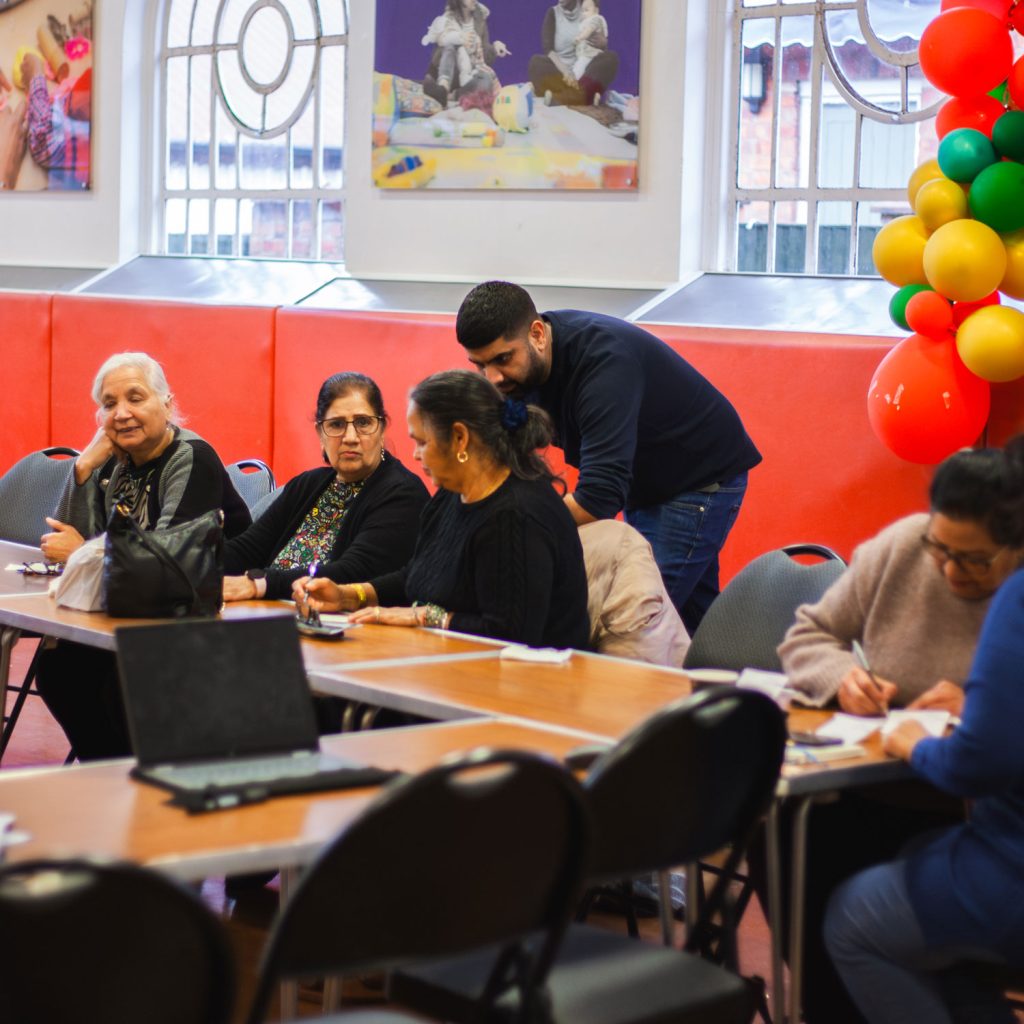
DOSTIA is an active member of the project’s Community Advisory Board (CAB), a group that brings together researchers, clinicians, community leaders, lived experts, students and engagement specialists connected to South Asian communities. From the first workshop, DOSTIA helped articulate who is around the table, who they represent, and why it is vital that South Asian voices shape dementia research, care and policy. Together, the CAB co-produced a shared set of values – trust, inclusion, respect, equity and collaboration – and a “roadmap to change” focused on building trust with communities, raising awareness in culturally meaningful ways, and co-creating practical solutions for better dementia care.
Building on long-standing work in Wolverhampton
In the second workshop, held in Wolverhampton, DOSTIA’s history of supporting South Asian families affected by dementia and Dr Karan Jutlla’s inclusive co-production research provided the foundation for the next phase of the project. Rather than starting from scratch, the group agreed that the project should build on what already works locally – such as community-based awareness videos, Punjabi-language resources, and creative engagement activities – and then identify gaps that still need attention. One of the clearest gaps was the limited involvement of South Asian men across generations in conversations about dementia, which the CAB agreed to prioritise in future work.
Co-producing principles and practical change
Across the workshops, DOSTIA has helped shape not only the ideas but also the way the project is run. Key principles that emerged – and that mirror DOSTIA’s own approach – include:
- Building relationships over time, not one-off engagements, with South Asian community organisations and families.
- Using creative, accessible methods (such as drawing, visual mapping and storytelling) so people can express what “living well with dementia” means without needing technical language.
- Feeding back findings to communities, recognising their expertise, and reimbursing people fairly for their time and knowledge.
- Avoiding generalisations about “South Asians” by paying attention to differences in language, faith, migration histories, gender roles and family structures.
These principles keep the project anchored in real lives and experiences, rather than in assumptions.
Expanding learning to Croydon and beyond
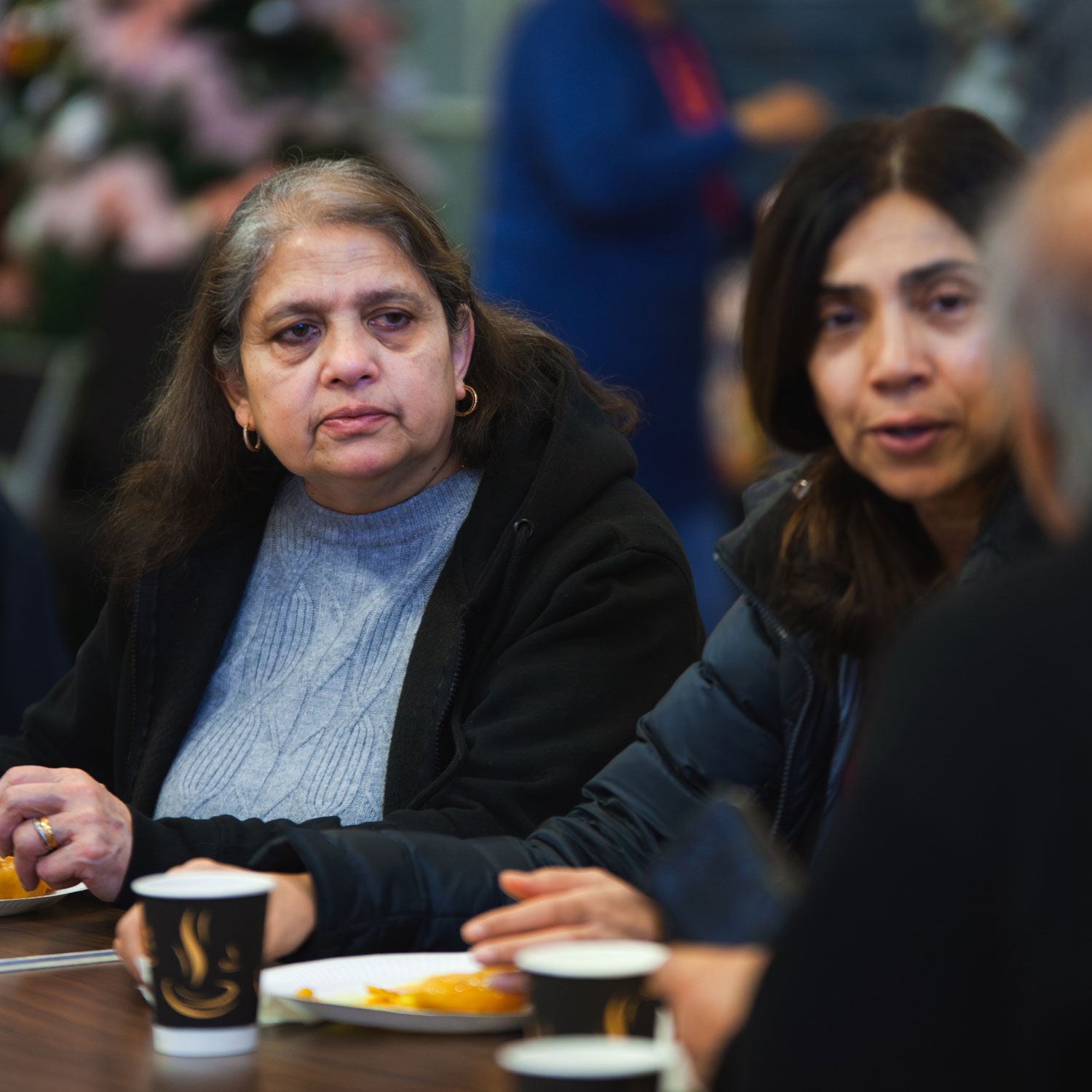
The third workshop, hosted at the Clocktower Café in Croydon (one of the venues for Manju Shahul-Hameed’s intergenerational dementia cafés), focused on adapting the Wolverhampton approach to a very different local context. Croydon’s South Asian communities are diverse – Sri Lankan, Tamil, Bangladeshi, Pakistani, Indian, Anglo-Indian and more, with multiple faiths and languages – and many people attend mixed, intergenerational dementia cafés rather than dedicated South Asian groups. Drawing on DOSTIA’s creative work in Wolverhampton, the CAB began planning how to show what “living well with dementia” looks like for different South Asian communities in Croydon, and how to use stories and visual maps to inform borough-wide dementia strategies.
The group identified practical ways to reach people who are less likely to engage with formal services – for example, through places of worship, local libraries, GP surgeries, barbers, and existing community mobilisers. They also discussed empowering “dementia champions” within communities, with particular attention to supporting women who may not feel able to approach male faith leaders about dementia. This work aligns with DOSTIA’s objective to improve access to support, reduce isolation and enable earlier diagnosis and intervention for South Asian families.
Focusing on South Asian men and intergenerational voices
Back in Wolverhampton, DOSTIA has been central in designing a series of workshops aimed at engaging South Asian men across generations, from younger men juggling work and caring responsibilities to older men directly affected by dementia. Together with researchers, DOSTIA helped map out trusted spaces where men gather – community groups, football clubs, dementia-focused programmes, parks and local social venues – and explored gender-sensitive ways of inviting them into conversations.
Through “Bridging gaps in dementia care,” DOSTIA is not only contributing to an innovative research and impact project; it is also advancing its vision of a future in which South Asian people affected by dementia can access dignified, culturally competent, and truly inclusive care – and can see their own stories at the centre of change. This project forms part of the EMPOWER Dementia Network+, which is working with underserved groups to make dementia care, services, and research more inclusive and equitable.